
Life is War
That’s not all it is. But it is always that
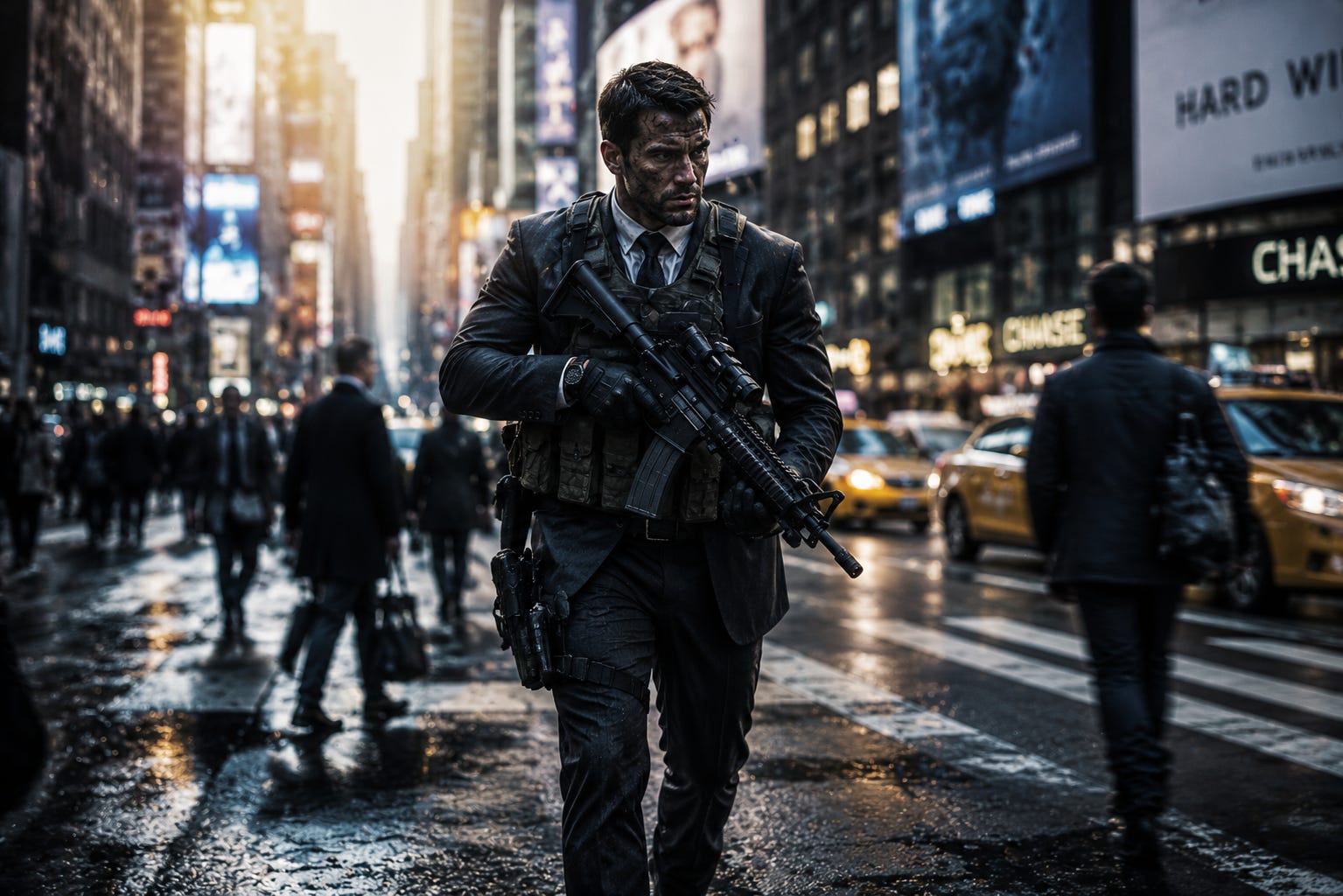
Life Is War
I have said this before, and I will keep saying it because I believe it is one of the most useful ways to understand the human condition:
“Life is warfare and a journey far from home,” Marcus Aurelius
Not because it must necessarily be violent. And not because every disagreement should be viewed as combat.
But because life is full of friction, uncertainty, chaos, competing wills, limited resources, bad information, changing conditions, and consequences.
That is war.
Clausewitz famously wrote that, “Everything in war is very simple, but the simplest thing is difficult.” That might be the best description of life there is.
The things that most of us want: Lose weight, get jacked, make money, save money, write the book, fix the marriage, become a better parent, lead the team, start the business, and achieve personal and professional goals.
They are all simple, but these simple things are difficult. The problem is not that you don’t know what to do. Most of the time, you know exactly what to do. The problem is that everything gets hard when friction shows up.
That’s where the war begins.
“Life is a battleground. It always has been, and always will be; and if it were not so, existence would come to an end.” C.G. Jung.
Most people misunderstand this. They think the war is out there. Against an easily identifiable enemy: Your boss, spouse, the economy, a political party, the stock market or job market, maybe even the supermarket, the algorithm. The idiots on the road.
Those things are real. (Especially the idiots. They’re everywhere.) But they are not the main enemy.
The real war is internal.
It is the war between the person you are and the person you are trying to become. Between what you want right now and what you claim to want most. Between your comfort and your calling. Between excuse and execution.
Marcus Aurelius wrote, “You have power over your mind, not outside events. Realize this, and you will find strength.”
"To be a man is to be a fighter." — Ralph Waldo Emerson
That is the foundation of Walking Point.
You don’t control the terrain, the weather, or the enemy. You do not control when and where the enemy will attack.
But you control your next tactical action. You control your response. You control the standard you hold yourself to.
You control whether you quit, whine, negotiate with the terrorists that hold you hostage, or get back on azimuth and Charlie Mike.
"Life is not a bed of roses, it is a battlefield." — Charles de Gaulle
That is why I keep returning to the language of war, campaigning, and leadership. Not because I think you should militarize your life, but because the military has spent thousands of years solving the same problem every serious person faces:
How do you move toward an objective through uncertainty, fear, resistance, limited resources, and imperfect information?
"Life is a great and wondrous battle, and the first duty of every man is to fight it." — Nikos Kazantzakis
The answer begins with strategic clarity.
What hill are you taking?
What does victory look like?
Who are you becoming?
What are you willing to fight for?
If you cannot answer those questions, someone else will answer them for you. And if someone else answers for you, they are in charge, and you are not Walking Point.
Strategy is choosing, prioritizing, and accepting that if you fight everywhere, you win nowhere.
Sun Tzu wrote, “Strategy without tactics is the slowest route to victory. Tactics without strategy is the noise before defeat.”
“We are at war. It’s a war for our minds, our hearts, and our souls.” — Napoleon Bonaparte
That is the constant state of conflict most people live in.
Some people are all strategy. They dream, journal, plan, and talk a great game. They have maps on the wall but no patrols in the field.
Others are all tactics. They grind every day, but without direction. They are busy and tired, but they are not taking the ground that matters.
You need both.
Think like a general. Fight like a sergeant.
“Life is war. That’s not all it is. But it is always that” -John Piper
The general asks: “What is the strategic aim? ” The sergeant asks: “What do we do right now?”
This is why I talk about the three levels of warfare: strategic, operational, and tactical.
The operational bridges the two. It is the art of Campaigning.
The Strategic is the long view that answers the question, “What does victory look like?”
The Operational turns the mission into forward movement. It asks, “What must be true 90 or 180 days from now?”
The Tactical is today. The fight in front of you. It asks, “What do I do right now when it is hard, boring, or inconvenient?”
Most failure is not a failure of desire. It is a failure of translation.
People fail to translate their strategic aim into operational objectives, and they fail to translate those objectives into daily tactical actions.
“I want to get in shape,” “I want to write a book,” or “I want to be a better leader” isn’t a plan. Those are wishes.
An order is different. It is clear. It has a mission, intent, execution, amin & logistics, command & signal.
Who is responsible? (You) What is the standard? What happens when friction shows up? How will you know if you are winning? It must be executable because wars are won in the execution.
Field Marshal Bernard Montgomery wrote, “It is essential to relate what is strategically desirable to what is tactically possible with the forces at your disposal.”
That is a sad truth. A lot of people fail because they pick objectives they cannot currently seize. Others fail because they pick objectives too small to matter.
The art is choosing hard but smart. Hard enough to force growth. Smart enough to support the strategic aim. Achievable enough to execute with the force you can generate on a bad Monday morning.
It has to exist in the thin zone between comfort and panic. That’s where real growth occurs.
This is campaigning. A series of related operations aimed at an objective over time, across terrain, under constraints.
That is how you build a life worth living. By taking ground, consolidating, learning, adjusting, and continuing the advance.
You win by making your standards sacrosanct and your systems stronger than your moods.

You win by preparing for the enemy’s most probable course of action. And in the war of life, the enemy is almost always you:
Your impatience. Your ego. Your appetite. Your laziness. Your need for approval. Your fear of looking foolish. Your addiction to comfort. Your habit of starting over rather than sticking to the plan.
The Stoics understood this. Epictetus taught that some things are up to us and some things are not.
The amateur spends his life angry at what he cannot control. The professional identifies what he can control, issues the order, and executes.
You don’t get to choose the war. But you do have to fight.
So, stop waiting for perfect clarity. Stop waiting for motivation. Stop waiting for the conditions to improve. Stop waiting for someone else to give you permission.
Plan, Execute, AAR, Repeat.
Life is war. There will always be friction, uncertainty, and chaos. Execute anyway.
Today’s tactic: Write one sentence that defines victory for the next 90 days. Then write the order. Situation, Mission, Execution, Admin & Logistics, Command & Signal.
Keep it simple enough to follow on a bad day. Because bad days are coming.
And that’s where the war will be won.
Until next week, Charlie Mike!
John - Your arms dealer for the war of life

“They are all simple, but these simple things are difficult.”
I think we often confuse ourselves by making complicated/complex things SOUND simple, and then we wonder why we’re struggling so hard with them. Framing things like losing weight or writing a book or building a good marriage as a big hard campaign or journey might be better fit for purpose.
This is worth (at least) another read and pondering. Great post.